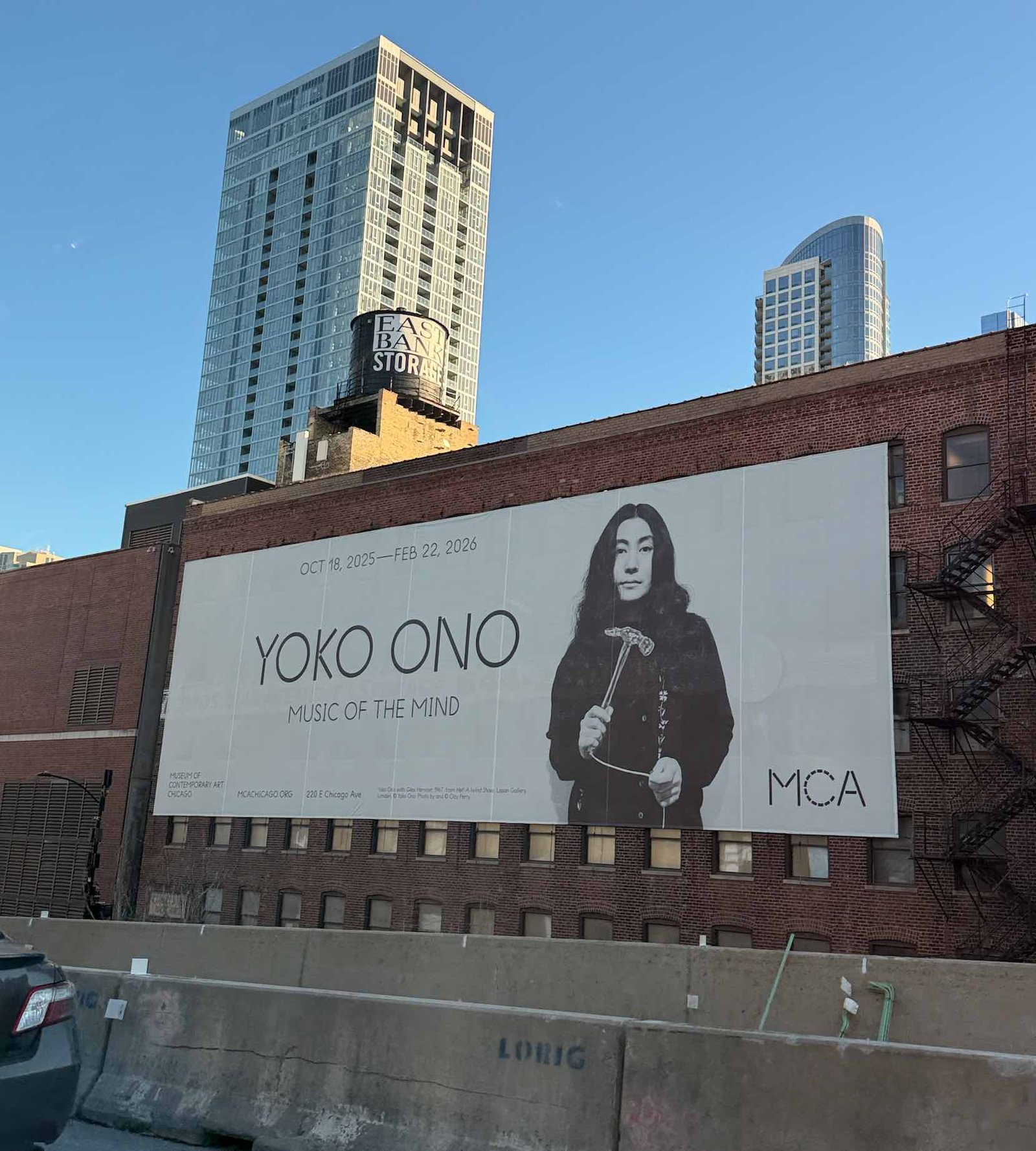
Yoko Ono’s Music of the Mind: Participatory Leadership Lessons
Travel Tuesday #52 – The Last of 2025 | December 30, 2025 by Barbara Rozgonyi
What I didn’t expect was how directly this exhibition would speak to the question shaping my work in 2026:
What do you believe—and how does that belief shape what you invite others to do?
Beyond the Headlines: Meeting Yoko Ono as an Artist
Most people meet Yoko Ono through a single lens: her marriage to John Lennon.
Music of the Mind gently—and powerfully—dismantles that narrow view.
Here is Ono as musician and composer.
Conceptual artist.
Playwright and poet.
Communicator and organizer.
She collaborated across disciplines, continents, and movements long before collaboration was fashionable.
The exhibition opens with something deceptively simple: handwritten instructions about her early work—notes that reveal how ideas, not objects, were always at the center of her practice.
From the start, the message is clear: art begins in the mind.
But it doesn’t end there.
It asks you to complete it.
Art You Don’t Just See. You Do.
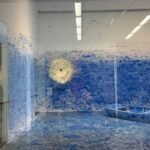
What struck me most was how participatory the experience was.
I could hammer nails into wood, write directly on gallery walls, leave wishes for strangers to read, write a note to my mother, even crawl into a black bag. The exhibition didn’t just allow participation—it required it.
Observation wasn’t an option.
You were either in—or you were missing the point.
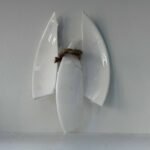
The most powerful space looked like a bull in a china shop aftermath: white porcelain teacups, shattered into fragments, spread out for the remaking.
The invitation was simple:
Make something new from what’s broken.
I watched people lean in, faces focused, piecing together curves and handles that would never again be perfect teacups. Instead the pile of pieces joined by glue and twine became artful hybrid shapes. Some works had no base. Every sculpture made its own rules.
Repair became creation.
Damage became design.
That’s not metaphor.
That’s method.
And it made me wonder:
What if leadership worked this way?
What if we stopped trying to restore what was and instead asked people to build what could be, using the fragments they already have?
When in your work or life has something broken become raw material for something stronger? I’d love to hear in the comments.
Instructions as Belief Systems
A recurring theme throughout Music of the Mind is the instruction—short, poetic prompts that ask you to imagine, notice, or act.
In the 1960s, Marshall McLuhan famously said, “The medium is the message.”
Yoko Ono countered:
“The message is the medium.”
That subtle inversion is simple, yet astonishing.
Instructions don’t describe belief they enact it.
They assume participation.
They trust you have something to contribute.
They give you agency and then step back.
That’s not observation.
That’s leadership.
And it requires something most organizations resist:
Letting go of control over outcomes.
What Participatory Leadership Actually Requires
Leadership that assumes participation looks radically different than leadership that broadcasts instruction.
It asks more of people and trusts them with more agency.
It means giving up control over how things look when they’re finished.
It means accepting that some people will hammer one nail and walk away, while others will return three times to add more nails and keep pounding.
It means repair won’t look like restoration.
It will look like invention.
Music of the Mind makes it unmistakably clear that Yoko Ono never worked in isolation. She collaborated with John Cage, Ornette Coleman, John Lennon and, most importantly, the public. She was a critical bridge within the Fluxus movement, carrying ideas between New York, Japan, and London.
Her work operates from three assumptions:
- The audience has agency.
- Individual actions matter.
- Ideas ripple outward.
Whether through Wish Tree, My Mommy Is Beautiful, or decades of peace activism, the invitation stays consistent:
Participate. Imagine. Believe. Act.
As her studio director notes in the exhibition, Ono embraced impermanence not as loss, but as possibility.
She said:
“The job of the artist is not to destroy, but to change the value of things.”
Read that again and substitute leader for artist.
That’s the work.
The Question That Shapes What Comes Next
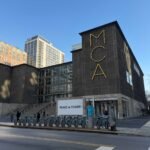
Walking through the MCA’s galleries with views onto Lake Michigan and Michigan Avenue, where the world outside continues as you reflect inside, I pondered one thought:
Belief precedes behavior.
If you believe people need to be told what to do, you build systems of instruction.
If you believe people need to be shown what’s possible, you build systems of example.
If you believe people are capable of co-creation, you build systems of invitation.
Yoko Ono chose the third path.
The work has lasted seven decades across three continents.
That’s not just art.
That’s architecture.
That’s how movements are built.
A Closing Reflection (and a Shift)
This visit was my 52nd Travel Tuesday post of 2025 and the last one that measures itself by geography.
What comes next isn’t about places.
It’s about what stays with you after you leave.
In 2026, my lens is shifting toward a single question:
What do you believe?
Because belief shapes how we create.
How we collaborate.
How we lead.
Less documentation.
More meaning.
Less performance.
More participation.
Some experiences don’t let you watch.
They make you complicit.
Music of the Mind did exactly that.
Yoko Ono: Music of the Mind is one of the most comprehensive exhibitions to date of the trailblazing artist, musician, and peace activist.
Tracing Ono’s career from the 1950s to the present, the exhibition features more than 200 works across performance, music and sound, film, photography, installation, scores, and arch
ival materials. A defining element of the show is participation: visitors are invited to engage with instruction-based works that activate imagination, agency, and collaboration.
Highlights include landmark works such as Cut Piece (1964), Film No. 4 (Bottoms) (1966–67), Fly (1970–71), and ongoing participatory projects like Wish Tree (1996–present) and My Mommy Is Beautiful (2004). Together, the exhibition reveals Ono’s enduring belief that art is not something to be observed at a distance, but something to be completed by the viewer.
Music of the Mind was organized by Tate Modern, London, in collaboration with Kunstsammlung Nordrhein-Westfalen, Düsseldorf, and presented at the Museum of Contemporary Art Chicago in the Griffin Galleries of Contemporary Art.