
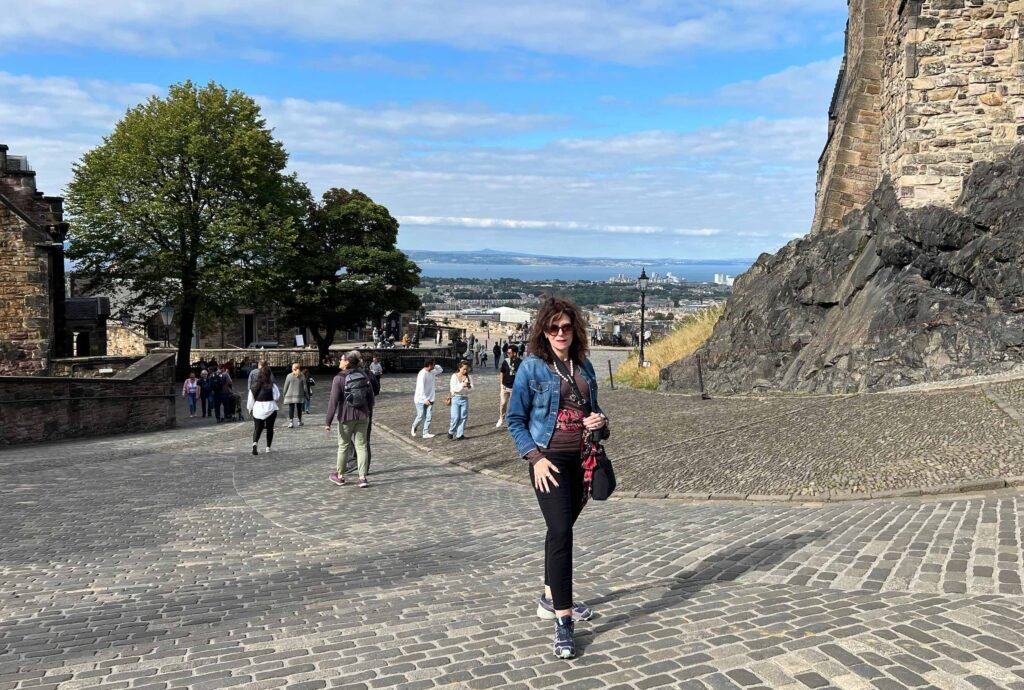
Have you ever stood somewhere and felt history run through your veins?
Today is the last day of Women’s History Month, and I’m sharing something I’ve never said publicly before.
Thanks to a family genealogist, I can trace the Stuart-Cory line directly back to Mary Queen of Scots. Millions of people worldwide are likely descendants through her son James. Some estimates suggest her lineage reaches a significant portion of people with British or European ancestry. But for me, this isn’t about numbers. It’s about quiet awe, and a thread of history that feels surprisingly personal.
This Travel Tuesday, I want to encourage everyone to look back at their own roots. You don’t need a deep genealogy project or a DNA test. Sometimes it starts with a family story, and then seeking out the places that bring it to life when you travel.
Every time I visit the UK, I trace more of Mary’s story. There’s something extraordinary about standing where she stood and wondering about all the lives and quiet strength between her and me.
It also connects to something close to my heart: I named my company CoryWest Media in honor of my mother and grandmother. Honoring the women in our lines, through business, travel, or storytelling, feels like one of the most meaningful ways to keep their stories alive. I wrote about women and time in a “We Are Who We Were backstory of CoryWest Media; this is the story of a woman time could not erase.
Here’s how I retraced Mary’s life through five historic sites I’ve visited myself, captured with my Sony camera. Each stop added another layer of wonder.
📍 Stirling Castle, Scotland — Crowned Before She Could Walk
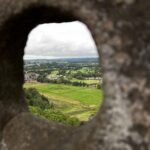
Mary became Queen of Scots at just six days old. By nine months, she was crowned in the Chapel Royal here. Sceptre placed in tiny hands, the weight of a nation on the smallest of shoulders.
I stood on the ancient walls and looked out through a stone opening at the same rolling green landscape her guardians would have watched over. Some views outlast everything. The humility of that moment stays with me.
Visitor information: Stirling Castle is managed by Historic Environment Scotland. Book Stirling Castle tickets in advance at stirlingcastle.scot.
📍 Palace of Holyroodhouse, Edinburgh — Her Home as Ruling Queen
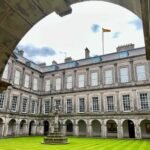
This was Mary’s royal residence from 1561 to 1567. I loved seeing the stately courtyard with the Scottish flag flying and the purple thistles blooming against carved stone lion faces. Scotland’s resilient national emblem, wild and impossible to ignore.
Mary held court here, debated John Knox on his own terms, and faced real danger, including the murder of her secretary David Rizzio just steps from where she sat, while she was six months pregnant. Beauty and drama live side by side in these walls.
Visitor information: The Palace of Holyroodhouse is the official Scottish residence of the monarch. Book Palace of Holyroodhouse tickets at rct.uk/visit/palace-of-holyroodhouse.
📍 Edinburgh Castle — Where She Gave Birth to a Future King
After fleeing Holyroodhouse, Mary gave birth to her son, the future James VI of Scotland and James I of England, in a small tapestry-lined chamber on June 19, 1566. This one birth would eventually unite the crowns his mother had fought for.

As I stood inside that intimate room, the silence and history felt almost palpable. The original tapestries are still hanging in place.
A museum display near the birth chamber notes that when the first guidebooks to Edinburgh Castle were published in the 1800s, Mary, rather than her more successful son James, was usually the central character. She was, and remains, the draw.
Visitor information: Edinburgh Castle sits at the top of the Royal Mile. Book Edinburgh Castle tickets at edinburghcastle.scot.
📍 Windsor Castle, England — The World of Her Cousin and Rival
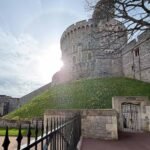
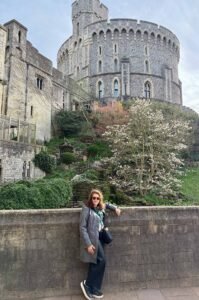
This March, we visited Windsor Castle.
Windsor represents the realm of her cousin Queen Elizabeth I, the crown that imprisoned Mary for 19 years. Two powerful women, connected by blood, divided by politics and faith, shaping each other’s destinies entirely from afar. They never once met in person.
Walking there made me reflect on visibility, power, and what it has always cost women to stand out.
Visitor information: Windsor Castle is a working royal palace. Book Windsor Castle tickets at rct.uk/visit/windsor-castle.
📍 Westminster Abbey, London — Her Tomb and Lasting Legacy
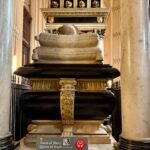 Her son King James I had Mary’s remains moved here and commissioned a tomb larger and more elaborate than Elizabeth I’s, placed directly across the aisle. History, corrected in marble.
I stood at that white marble effigy with the crowned Scottish lion at her feet and felt its heaviness. Yet it also felt triumphant. The inscription includes the words “all who are descended from her.”
I am one of them.
Visitor information: Westminster Abbey is open to visitors most days. Book Westminster Abbey tickets at westminster-abbey.org.
Where This Journey Leads Me

Mary’s embroidered motto, “In my end is my beginning,” wasn’t resignation. It was vision.
She spoke six languages. Survived three marriages. Endured 19 years of imprisonment. And still has her story told 500 years later, including the recent decoding of 57 secret encrypted letters she wrote from captivity.
Her life reminds me that our personal narratives can outlast every attempt to silence them. Visibility isn’t always comfortable. But it can become legacy.
This light tracing of my family line hasn’t changed my daily life. We don’t have royals here in the U.S., and it was centuries ago. But it sparks wonder about all the choices, and all the quiet resilience, that connect us across time.
If this encourages even one person to look back at their own family stories, through travel, old photos, or a conversation with a relative, then sharing it today feels exactly right.
Which woman in history, or in your own lineage, has shaped your life story? I’d love to hear your stories in the comments.
Frequently Asked Questions
Where did Mary Queen of Scots grow up?
Mary Queen of Scots was born at Linlithgow Palace in December 1542 and moved to Stirling Castle at 7 months old, where she was crowned Queen of Scots. She spent her early childhood at Stirling before moving to France at age 5.
What is the Palace of Holyroodhouse’s connection to Mary Queen of Scots?
Holyroodhouse in Edinburgh was Mary’s primary royal residence from 1561 to 1567. She held court there and experienced some of the most dramatic events of her reign, including the murder of her secretary David Rizzio.
Where is Mary Queen of Scots buried?
Mary Queen of Scots is buried at Westminster Abbey in London, in the Lady Chapel. Her son King James I commissioned her elaborate white marble tomb in 1612, placing it directly across the aisle from Queen Elizabeth I’s tomb.
What did Mary Queen of Scots embroider in captivity?
During her 19 years of imprisonment, Mary stitched the motto “En ma fin est mon commencement” — “In my end is my beginning” — onto her cloth of estate. It remains one of the most quoted phrases associated with her.
Was Mary Queen of Scots at Edinburgh Castle?
Yes. Mary gave birth to her son, the future King James VI of Scotland and James I of England, at Edinburgh Castle on June 19, 1566. The birth chamber still exists and is open to visitors today.
About Barbara Rozgonyi
Barbara Rozgonyi is a keynote speaker, personal brand strategist, and founder of WiredPRWorks and Corey West Media, named in honor of her mother and grandmother. She traces her lineage through the Stuart-Cory family line to Mary Queen of Scots and travels the world with her Sony camera finding the stories history left behind. Follow her Travel Tuesday series on LinkedIn and at wiredPRworks.com.
#TravelTuesday #WomensHistoryMonth #MaryQueenOfScots #ScotlandTravel #WomensHistory #Legacy #Storytelling #FamilyHistory #PersonalBrand

