What Makes a Personal Brand Memorable? Storytelling Lessons from Aardman’s Animations
How can character, craftsmanship, and fingerprints make your personal brand or corporate brand unmistakably yours? Inspired by a visit to the Inside Aardman exhibit at Young V&A London in March 2026. Wallace & Gromit have been part of our family’s movie nights for years. And Shaun the Sheep? Well, he’s got enough personality to carry an entire story without saying a word.
A Travel Tuesday Perspective on Personal Brand Storytelling | By Barbara Rozgonyi
I’ve been thinking a lot about personal brand storytelling lately, especially how our personalities, experiences, and reputations shape what people remember about us.
And I found an unexpectedly wonderful example during our recent visit to London’s Inside Aardman exhibition, where Wallace & Gromit, Shaun the Sheep, and their fellow characters have been brought to life through decades of imagination and craftsmanship.
There’s something about hearing the Wallace & Gromit theme music that makes me smile.
Maybe it’s because our family has been watching their adventures for as long as I can remember. When our kids were growing up, we’d pop in a VHS tape, later a DVD, and settle in for another adventure with the cheese-loving inventor and his exceptionally clever dog.
We had Wallace & Gromit toys. We loved Shaun the Sheep. And who could forget Feathers McGraw, the seemingly innocent penguin with a rather sinister agenda?
Every family has certain movies, characters, and stories that become part of its shared history. Wallace & Gromit are part of ours.
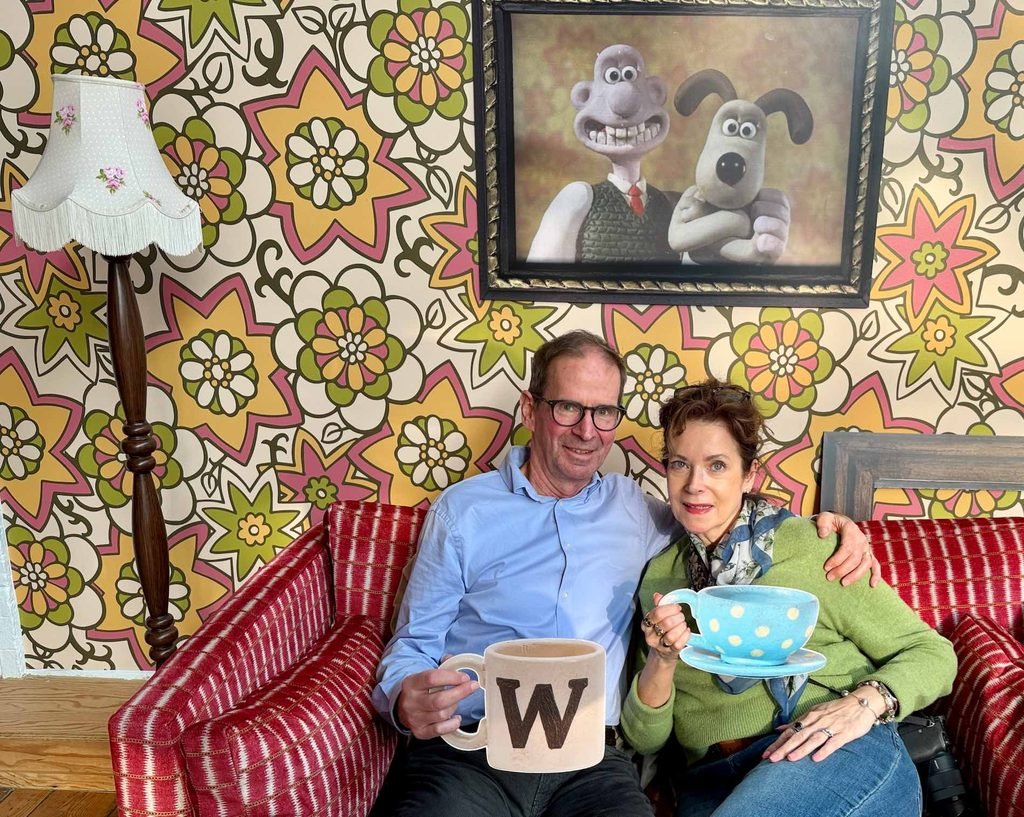
So when Bruce and I visited London and had the opportunity to see Inside Aardman: Wallace & Gromit and Friends at the Young V&A, we couldn’t pass it up.
In fact, I recently shared our exhibition photo for our anniversary. One of my sorority sisters asked what made the picture significant. I sent her the exhibition link and started remembering just how much fun we’d had.
The more I thought about it, the more I realized there was another story I wanted to tell.
Because somewhere between the miniature sets, boxes of interchangeable mouths, early sketches, and character bibles, I found myself thinking about something that’s central to my work as a marketing, PR, and AI visibility advisor.
What makes you unmistakably YOU?
And are you giving other people enough opportunities to see it?
Whether we’re talking about personal branding storytelling or corporate branding, being recognizable goes well beyond having a memorable logo, polished website, or impressive professional bio.
It’s about character. The combination of personality, experience, perspective, and reputation that makes someone or something distinctive.
And as AI makes it easier for almost anyone to create professional-looking content, I think those human qualities are becoming even more important.
Inside Aardman: A Cracking Good Exhibition
The exhibition celebrates 50 years of Aardman Animations, the British studio behind Wallace & Gromit, Shaun the Sheep, Morph, Chicken Run, and other wonderfully imaginative productions.
More than 150 objects trace the studio’s creative journey, with material from films including A Grand Day Out, The Wrong Trousers, Chicken Run: Dawn of the Nugget, Robin Robin, The Pirates! In an Adventure with Scientists!, and the more recent Wallace & Gromit: Vengeance Most Fowl.
And Aardman isn’t slowing down. Its newest feature, Shaun the Sheep: The Beast of Mossy Bottom, arrived in cinemas in September 2026, just in time for the studio’s 50th anniversary celebrations.
Housed at the Young V&A in Bethnal Green, London, it’s designed primarily for children and families. But don’t let the location fool you.
For adults, artists, writers, photographers, marketers, and anyone fascinated by creativity, there’s an extraordinary amount to discover.
The exhibition follows the production journey from the first idea through writing, character development, model-making, animation, lighting, sound, and post-production.
There are original sketches, miniature sets, props, production equipment, and opportunities to explore the techniques behind stop-motion animation.
I particularly appreciated how accessible the experience was. The technology was there, but it didn’t overwhelm the story. You could enjoy the characters simply because they’re delightful, or look more closely at the extraordinary craftsmanship behind them.
As a photographer, I also appreciated being able to capture so many of the details.
And there were plenty!
Every Great Story Starts With a Big Idea
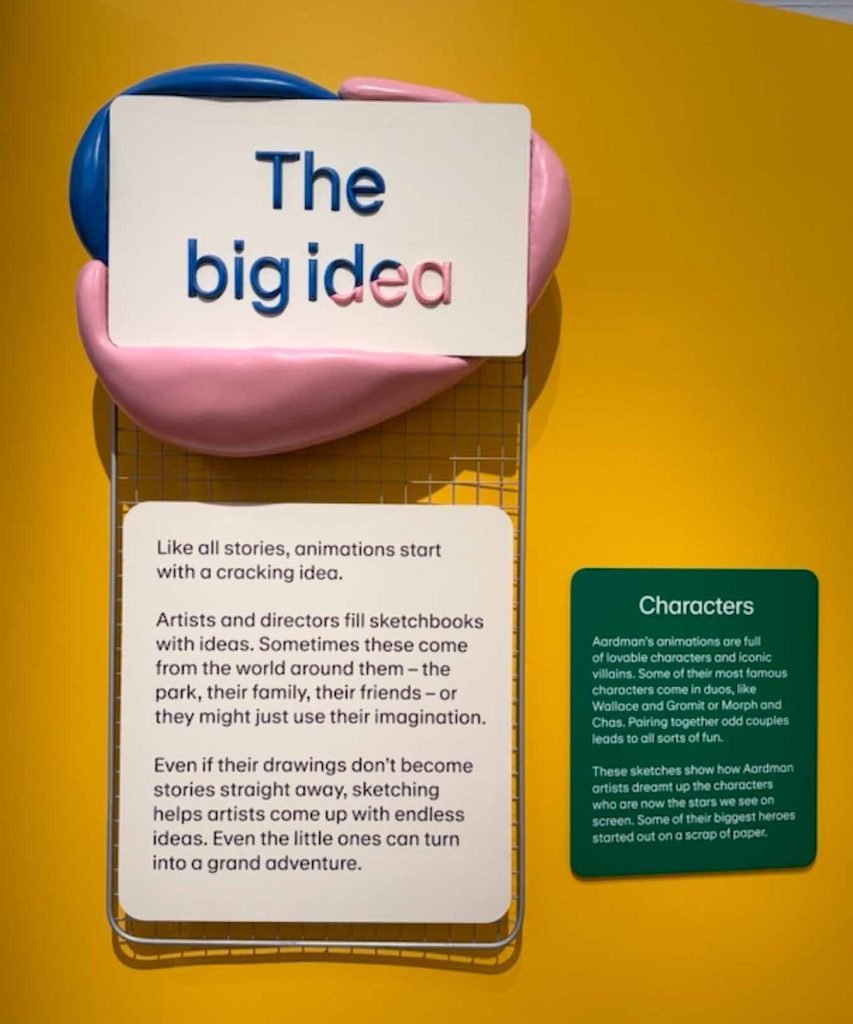
One of the first displays was titled The Big Idea.
It explained how Aardman’s artists and directors fill sketchbooks with ideas drawn from everyday life, including family, friends, parks, and their own imaginations.
Not every sketch becomes a finished production. Some ideas wait. Others evolve. Something that starts as a tiny observation might eventually become an entire animated adventure.
I loved this.
It’s one reason I enjoy traveling, visiting museums, taking photographs, and writing Travel Tuesday stories.
Sometimes I wonder whether these travel features are a little too far removed from my professional work.
After all, I advise executives and organizations on marketing, PR, AI, visibility, and reputation. What does visiting a museum have to do with any of that?
Quite a lot, actually.
Travel gives me new perspectives. Photography makes me pay attention. Museums introduce me to ideas, people, and creative approaches I might never encounter sitting at my desk.
And when I bring those experiences back and share them, I hope readers discover something interesting, too.
The best ideas don’t always emerge from a formal strategy session.
Sometimes they begin with a curious mind, an open sketchbook, or an afternoon spent with a plasticine penguin.
The Character Bible: What Makes a Brand Recognizable?
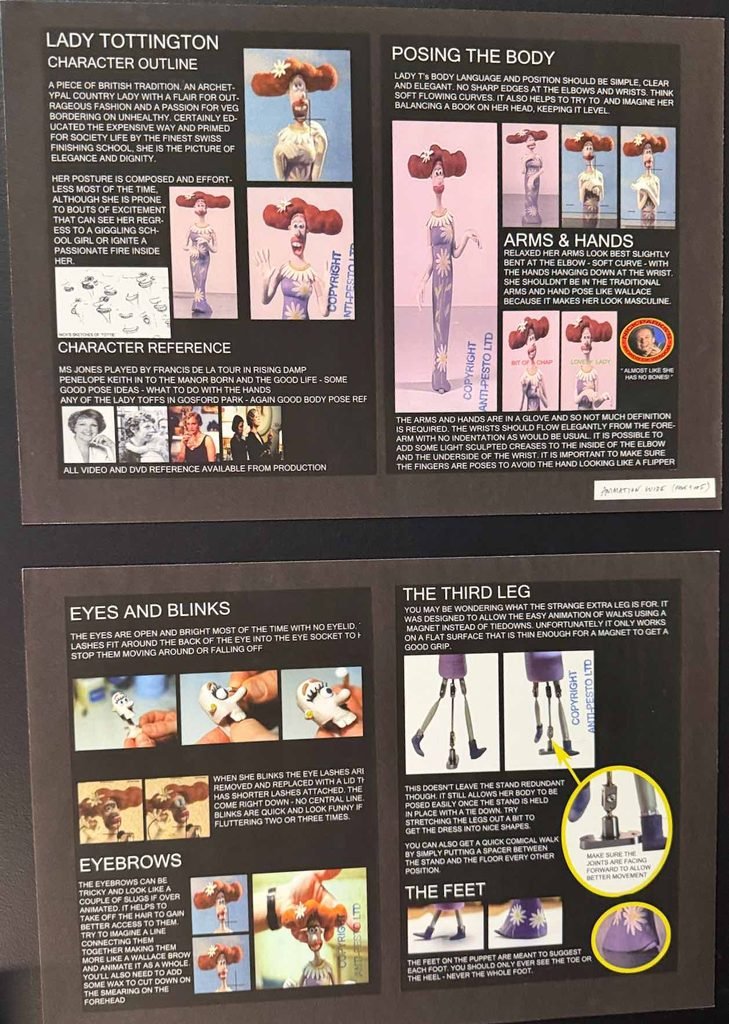
One of my favorite discoveries was Aardman’s use of a character bible.
This is where things got especially interesting for my marketing and PR brain.
A character bible documents how a particular character should look, move, behave, and express themselves.
The exhibition featured pages from Lady Tottington’s character bible, created for Wallace & Gromit: The Curse of the Were-Rabbit.
Her posture, gestures, walk, eyebrows, eyes, blinking, and expressions were carefully detailed.
One panel demonstrated how she performs a particular hip movement. Another showed the sequence of movements involved in walking.
There were even instructions about the positioning of her hands and the mechanics that allow animators to pose her correctly.
Why so much documentation?
Because multiple animators may work on the same character across different scenes. They need a shared understanding of who that character is and how that character behaves.
Otherwise, continuity disappears.
And that made me wonder:
If Aardman needs a character bible to keep one animated character consistent, shouldn’t leaders and organizations think just as carefully about their own character?
We spend a great deal of time in marketing developing ideal client profiles.
Who is our audience? What do they need? What motivates them? What problems are they trying to solve?
All important questions.
But what about our own character profile? How do we convey our own personal brand storytelling?
Who are we? What makes us different? How do we behave? What do we believe? What makes our work recognizable?
It’s one thing to know whom you want to attract.
It’s another to give those people something distinctive to recognize, remember, and trust.
PR: Personality and Reputation
In my WIRED PR keynotes, I started defining PR as Personality and Reputation.
There are plenty of other possibilities. Persona and Relationships, for example, also fit nicely.
But walking through Aardman’s exhibition brought me back to my original interpretation.
Personality is what makes you interesting.
Reputation is what people come to know, experience, and expect from you.
And the two are connected.
Wallace has a wonderfully recognizable personality. He’s inventive, optimistic, occasionally oblivious, and endlessly enthusiastic.
Gromit rarely needs to say anything. One raised eyebrow communicates volumes.
Then there’s Feathers McGraw, whose expressionless exterior makes his villainous behavior all the more entertaining.
These characters have distinctive identities, and their personalities shape how audiences experience their stories.
Now think about your own organization or professional presence.
If someone removed your logo, name, and photograph from your content, would your audience still recognize you?
Does your personality come through in your communications?
Does your reputation reflect the expertise, values, and experiences that make you different?
Or have you become so focused on sounding professional that you’ve polished away some of your most interesting qualities?
Aardman’s Thumbiness: Why Fingerprints Matter
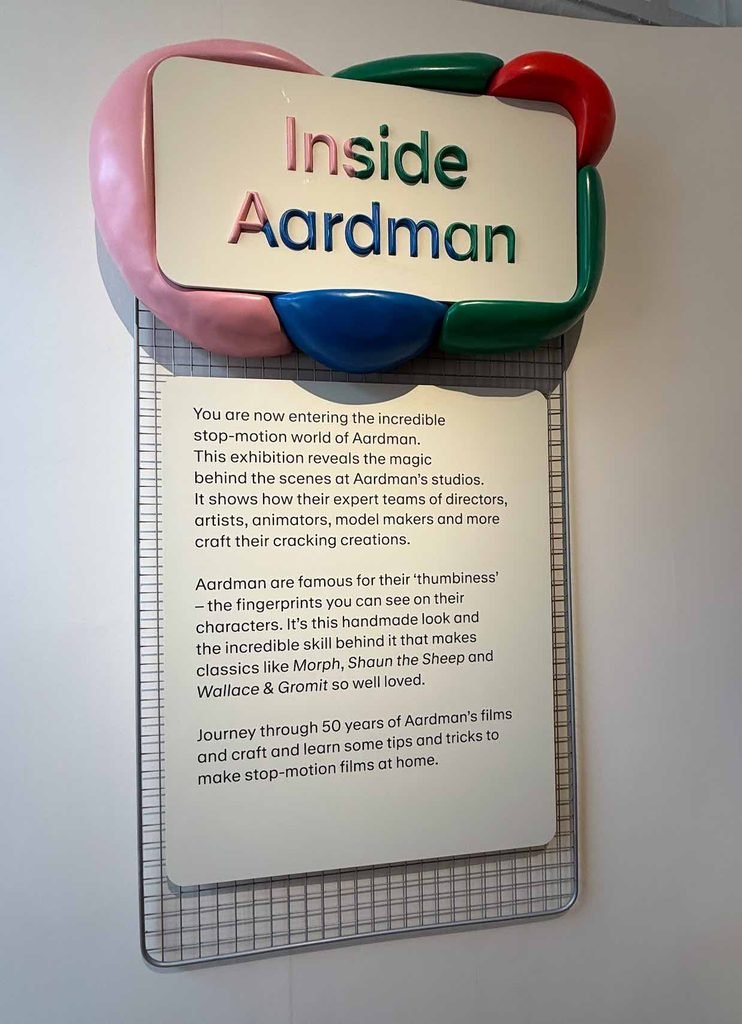
Another exhibition detail absolutely delighted me.
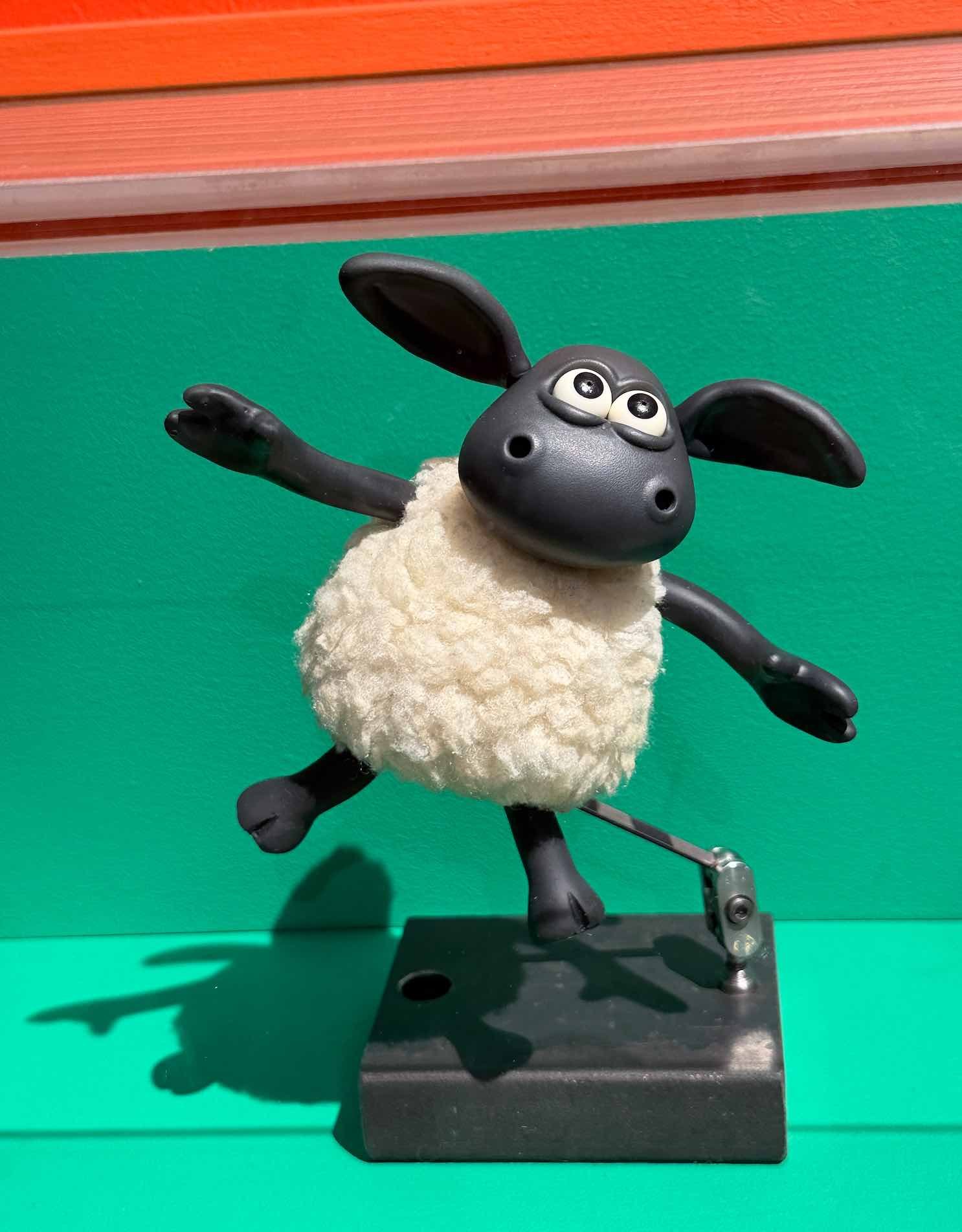
Aardman has a word for the fingerprints you can sometimes see on its handmade characters.
Thumbiness.
Rather than hiding every trace of the artists’ hands, that tactile, handmade quality has become part of Aardman’s distinctive visual identity.
Think about that for a moment.
In a world increasingly filled with digitally perfected images, polished presentations, and AI-generated content, visible fingerprints are part of what makes Aardman’s work special.
You can see that somebody made it.
That got me thinking about what I might call our character thumbprint.
What’s the combination of experiences, perspectives, personality, knowledge, and creative instincts that makes you or your organization recognizable?
What are the qualities that can’t be reproduced simply by asking an AI tool to generate something professional?
I think this is especially relevant for experienced leaders and established organizations.
You’ve accumulated years of knowledge, stories, relationships, accomplishments, and perspectives.
But how much of that comes through in your public presence?
Personal Branding, Corporate Branding, and the Expert Gap™
Personal branding is how an individual’s expertise, personality, values, and reputation are communicated and recognized.
Corporate branding extends that identity across an organization, including its people, culture, communications, and customer experiences.
Both can suffer from what I call the Expert Gap™, the disconnect between what someone has accomplished and how clearly their expertise is recognized, trusted, and chosen.
Sometimes the gap isn’t a lack of experience, qualifications, or results.
It’s that people aren’t seeing enough of what makes you different.
They might know your job title, read your bio, or see your company’s list of services.
But do they understand how you think?
What do you notice that others overlook?
What makes your approach distinctive?
Why do clients, members, audiences, or colleagues value working with you?
For association executives, that character might emerge through the organization’s history, member stories, community, and leadership.
For CMOs, it might be the distinctive perspective that connects an organization’s positioning, customer experience, and communications.
For meeting planners, it could be the personality and purpose that transform an ordinary conference into an experience attendees remember.
For thought leaders and business owners, it’s often the combination of professional expertise and personal perspective that makes their work worth following.
One of the things I enjoy most about strategic advisory is discovering those qualities in people and organizations.
I like looking beyond the standard bio, brand guidelines, or list of services to understand what makes someone genuinely distinctive.
Then we can explore how to make those qualities more visible.
Perhaps we need to spend a little less time asking only, “Who’s our ideal client?”
And a little more time asking, “What’s our character profile, and are we showing it?”
Six Seconds of Animation. One Week of Work.
Of course, developing memorable characters is only part of the process.
Bringing them to life takes an astonishing amount of work.
One exhibition display explained that an Aardman animator typically produces about six seconds of finished footage in a week.
Six seconds!
The display included a production scheduling board from Wallace & Gromit: Vengeance Most Fowl, showing how different animators coordinate their work across scenes.
Aardman has since transitioned from physical scheduling boards to digital planners.
That detail caught my attention, too.
The tools used to coordinate creative work can change without abandoning the craftsmanship that makes the finished product special.
Another display featured boxes filled with interchangeable mouth pieces used to animate speech.
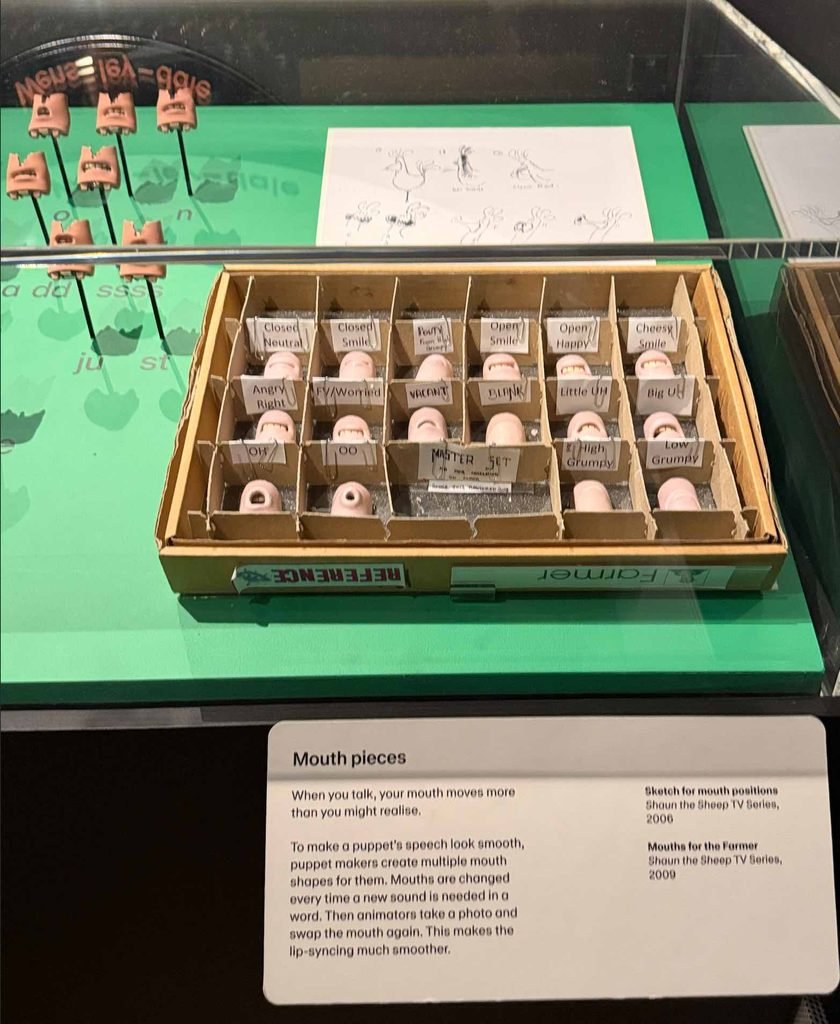
Different sounds require different mouth shapes. Animators carefully replace the pieces between photographs to create the illusion of continuous movement.
There were also miniature sets, lighting arrangements, camera equipment, and displays explaining the role of writers, directors, designers, animators, and voice performers.
I loved seeing the miniature museum set from The Wrong Trousers. Even a fictional museum inside an animated film requires careful design, props, and lighting.
The level of detail was extraordinary.
And yet, when we’re watching a Wallace & Gromit movie, we aren’t usually thinking about any of that.
We’re enjoying the story.
That’s the magic of great craftsmanship.
What AI Can Learn From a Little Clay Animation
It’s difficult to explore Aardman’s production process without thinking about the rapid evolution of AI.
Today, we can generate images, develop storyboards, write scripts, create videos, and produce marketing content at remarkable speed.
For small businesses and marketing teams, these capabilities offer exciting opportunities.
But speed alone doesn’t create something memorable.
Aardman’s work demonstrates what happens when technical skill, imagination, personality, and consistent creative direction come together.
The studio has evolved its tools over time. The exhibition even included examples of how traditional film cameras were adapted for stop-motion production before digital technology became part of the workflow.
Technology changes.
The need for compelling characters and worthwhile stories remains.
I see a similar opportunity for organizations using AI.
AI can help research, organize, develop, and distribute ideas. It can make expertise easier to access and support creative experimentation.
But someone still needs to determine what the organization stands for, which stories are worth telling, and how its personality should come through.
And here’s another reason the character bible fascinated me.
If multiple human animators need guidance to maintain a consistent character, imagine how useful a clearly defined identity could be when multiple employees, agencies, and AI assistants are creating communications for the same organization.
Your brand needs more than a logo and a color palette.
It needs a recognizable character.
The goal isn’t to make everything sound identical. It’s to make sure that everything you create feels connected to who you really are.
And perhaps we should be careful not to polish away all the thumbiness in the process.
What Does Your Audience Get Out of the Story?
There’s another connection to marketing and PR that I couldn’t overlook.
We frequently talk about WIIFM: What’s In It For Me?
It’s an important question. Our audiences want to know why they should care.
But the Aardman experience reminded me that value isn’t always purely practical.
Sometimes the value is laughter.
Sometimes it’s nostalgia, imagination, discovery, or the pleasure of sharing something with someone you love.
For me, visiting the exhibition brought back memories of watching Wallace & Gromit with our children.
It also gave me a new appreciation for the artists whose work made those family experiences possible.
That’s quite a return on an afternoon at a museum.
And it’s worth remembering when we’re communicating with customers, members, employees, and event audiences.
People don’t simply want information.
They want experiences that mean something to them.
An association member may be looking for belonging as much as professional development.
A conference attendee may remember how a speaker made them feel long after they’ve forgotten the presentation slides.
A prospective advisory client may be looking for someone who understands their challenges and sees possibilities they haven’t considered.
Great storytelling connects what we offer with something our audience genuinely values.
What’s Your Character Thumbprint? Five Questions Worth Asking
You don’t need to develop a 50-page character bible to start thinking about what makes your personal or corporate brand recognizable.
Here are five questions I’d encourage leaders, marketers, and organizations to consider:
- Personality: What three characteristics consistently describe how you or your organization show up?
- Perspective: What do you see, believe, or understand that others in your field might overlook?
- Reputation: What do people already recognize, appreciate, or trust you for?
- Consistency: Does that character come through across your website, LinkedIn, presentations, marketing, and AI-generated content?
- Recognition: If someone removed your name and logo, would anything about your communications still be unmistakably yours?
The objective isn’t to invent a new personality.
It’s to make the one you’ve already developed easier for other people to recognize.
That’s an important part of closing the Expert Gap™.
Building a Brighter Presence, One Fingerprint at a Time
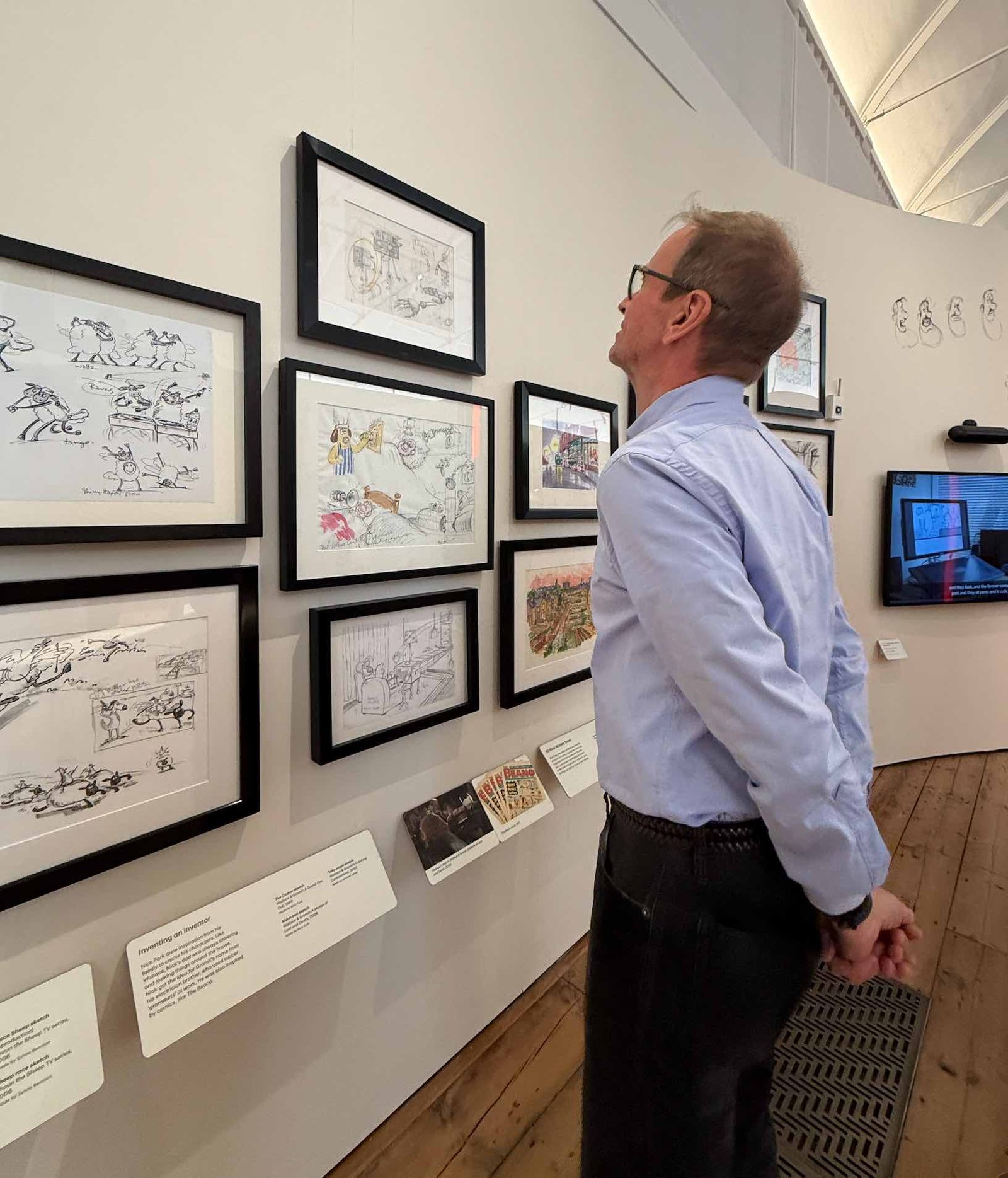
As Bruce and I explored the exhibition, I kept finding new reasons to appreciate these familiar characters.
There was the nostalgia of our family’s movie nights.
The humor of Wallace’s inventions, Gromit’s expressions, and Shaun’s mischievous adventures.
The extraordinary attention to detail.
And, perhaps most of all, the imagination and craftsmanship of the people who bring these characters to life.
Aardman’s creations have been entertaining audiences across generations, and the studio’s distinctive personality is a big part of that appeal.
Which brings me back to Brighter Presence™.
For me, building a brighter presence isn’t about becoming louder, appearing everywhere, or creating an endless stream of content.
It’s about making the qualities that make you valuable easier for other people to discover, recognize, and appreciate.
Aardman does this beautifully.
Its characters have personality. Its work has craftsmanship. Its stories connect with people. And its creative identity is recognizable even when the studio’s name isn’t on the screen.
So here’s something to consider:
What’s your character thumbprint?
What makes you, your business, or your organization unmistakably you?
And are you leaving enough fingerprints on your work for other people to recognize them?
Because in a world where almost anyone can generate more content, perhaps one of the most valuable things we can do is show more of who we really are.
Now, if you’ll excuse me, I think it’s time to revisit The Wrong Trousers.
That penguin still makes me laugh.
Planning a Visit to London?
Inside Aardman: Wallace & Gromit and Friends
Young V&A
Cambridge Heath Road
Bethnal Green, London
Exhibition closes November 15, 2026.
Celebrating Aardman’s 50th anniversary, the exhibition features original character models, sketches, storyboards, props, and miniature sets.
It’s designed for children and families, but I found it equally inspiring as an adult, writer, photographer, and creative professional.
Advance booking is recommended.
Explore the exhibition and book tickets at the V&A.
What’s Aardman’s newest movie?

Released September 18, 2026
Shaun the Sheep: The Beast of Mossy Bottom
A Halloween-themed adventure in which Shaun experiments with science after the Farmer destroys the flock’s pumpkin patch. Naturally, things get rather out of hand.
It’s Shaun’s third feature-length film and Aardman’s latest feature release as of September 29, 2026. Directed by Steve Cox and Matthew Walker.
All exhibition photographs accompanying this article were taken by Barbara Rozgonyi.
About Barbara Rozgonyi
Barbara Rozgonyi is a strategic marketing, PR, and AI visibility advisor, keynote speaker, and founder of Brighter Presence™.
She shows experienced leaders and organizations how to close the Expert Gap™, making their expertise easier to discover, recognize, trust, and choose.
Through strategic advisory, speaking, and training, Barbara brings together personal branding, corporate communications, reputation, and emerging AI discovery.
A photographer, writer, mom of three, and curious traveler, she frequently finds fresh business perspectives in unexpected places.
Explore strategic advisory and ways to work together at BarbaraRozgonyi.com.